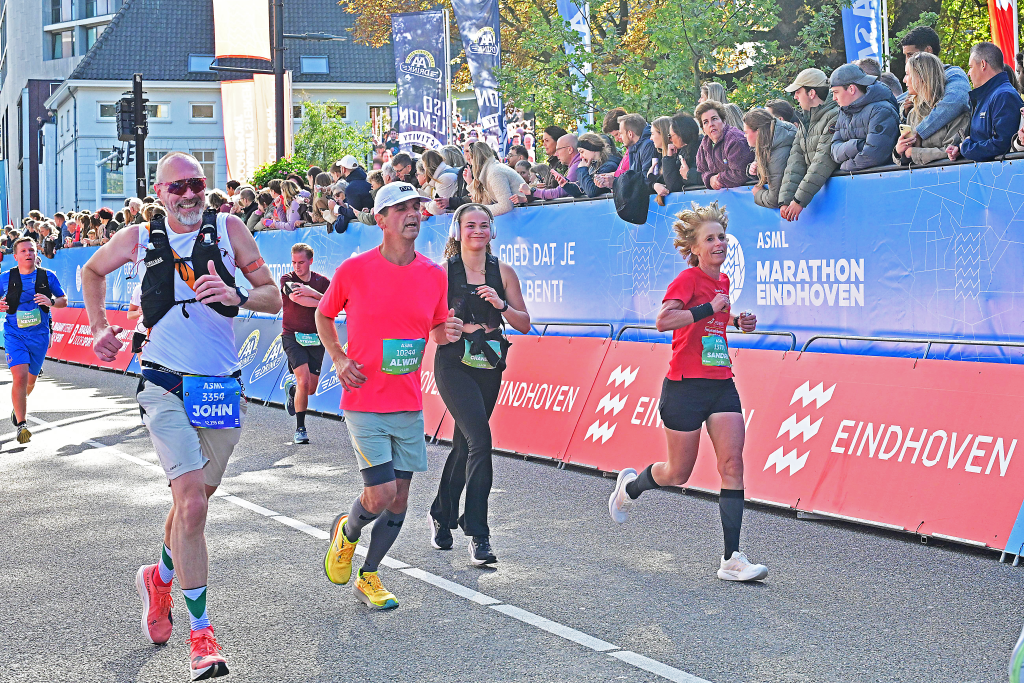
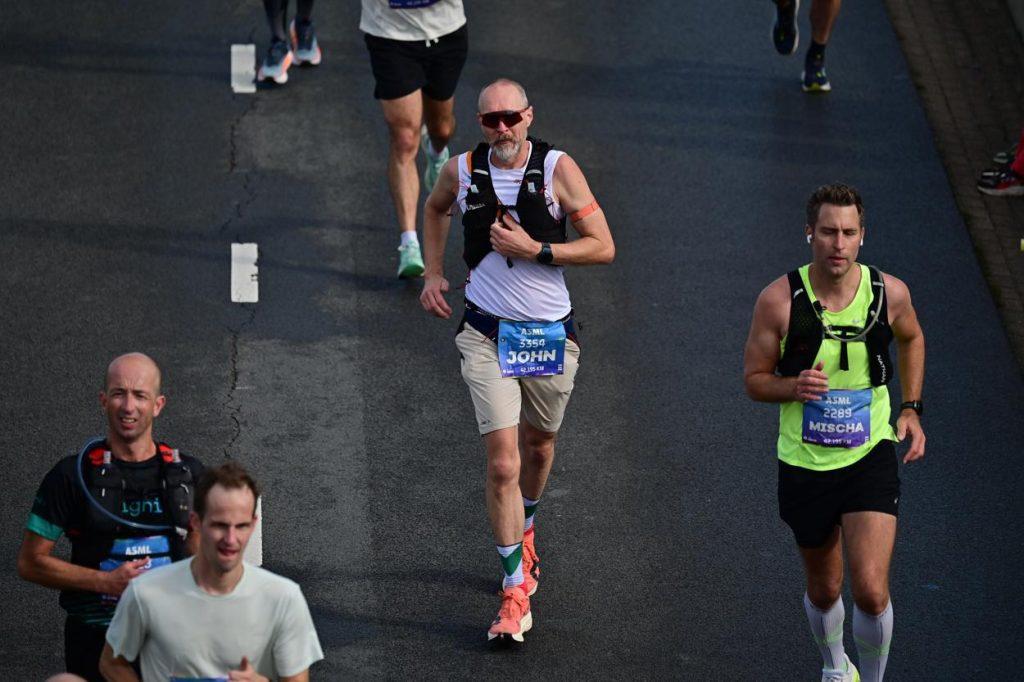
Now all yesterday’s dust has settled… No, let me rephrase that: Now all yesterday’s sand has settled, I have to admit: I didn’t do that bad at the Schoorlse Duinen Trail in Groet. I ran 17 kilometers, mostly in the sand, and 343 meters of altitude in 1 hour, 53 minutes and 51 seconds. That’s okay.
After the race I talked with a few other runners. They all had the same idea: this was a monstrous trail. On Instagram, Strava, everybody had the same idea. It was hard, it was hot, it was heavy. So, I wasn’t the only one struggling my way through it.
Okay finish
This morning I looked at my stats again. They are not too bad. My start was pretty okay. Maybe even a little too fast for such a heavy trail. My finish was okay, with 5.50 minutes per kilometer. Not super, but okay, seeing I was still running through the dunes and over the beach.
So, it was mostly the feeling that wasn’t good. Now rhythm and trail running are two different things. On the road you want to find your rhythm, your pace, and keep that as long as possible. On the trails your rhythm is always different. You continuously run uphill, downhill, small single tracks, muddy parts, dusty parts. You have to keep adapting. And that’s what I like about it.
Running rhythm
Yet, I do like to find something of a rhythm, even if it’s for a short time. Some momentum, when you just run, without thinking. Yesterday I had it on a couple of downhill stretches, but only a couple. For the rest, I was just trying to get one foot in front of the other.
The last time I struggled was the Three Mealls Trail Race in Scotland. The downhill there was just surviving, because of all the mud and the bog. But even the bumping and bobbing around there felt like a rhythm compared to yesterday.
Running data
I like data. I keep track of my progress. Can I run further? Is my stamina improving? Yet, during races I only keep an eye on my heart rate. I don’t care that much about my pace. Every trail is different, so my pace will be different as well.
Only afterwards I look at the running data. Just out of curiosity and to see if it confirms what I felt during the race. Up until yesterday it always did. If I felt strong at the end, I could see that my pace went up at the end. If there was a hard climb in the middle, I could see that my heart rate went up and my pace went down.
Yesterday’s data however don’t correspond with my feelings. Luckily in a positive way. Because I felt miserable, but the data says I didn’t do that bad. That’s a good boost for next weekend, because that’s when the next race is already waiting for me.