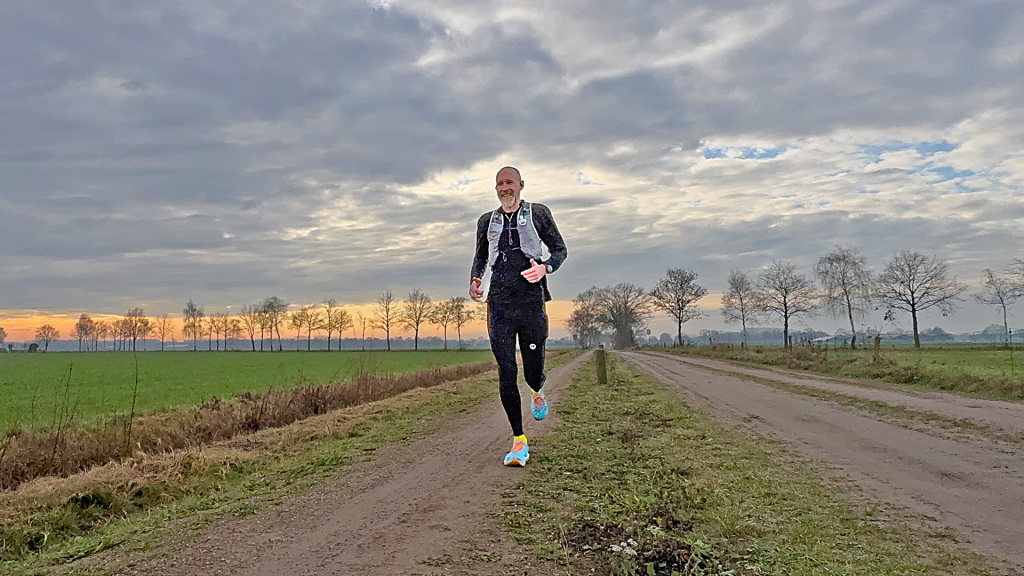
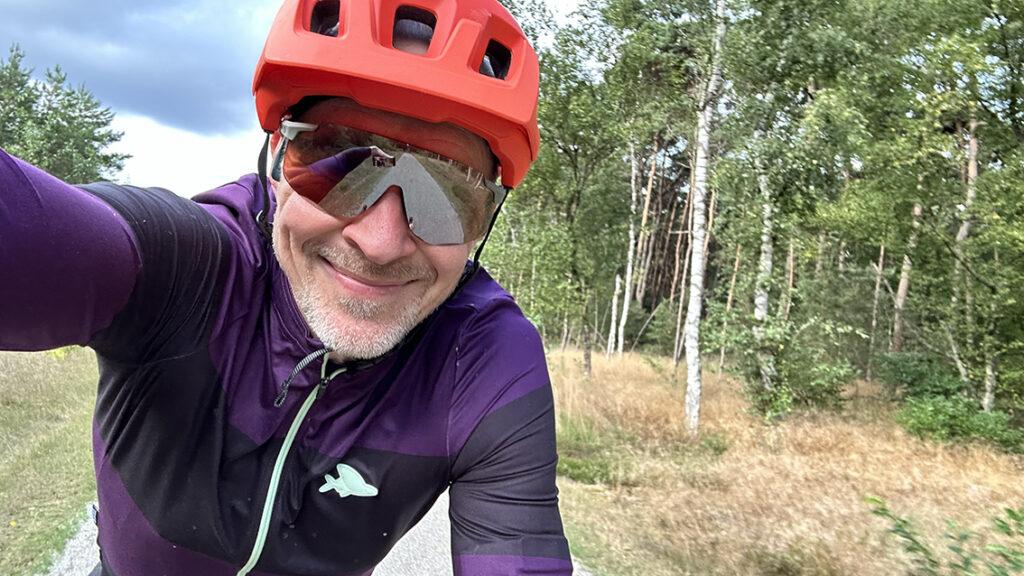
I did a bike fit before buying a new bike because I wanted to know what actually fits me. With so many brands all using their own sizing and geometry, I did not want to spend a few thousand euros on the wrong one.
It is ten to eleven in the morning when I walk into the Benkey building next to Eindhoven Airport, bike in hand. Sportfocus has two offices there. The one on the left is filled with gym equipment. The one on the right has a table, a couple of chairs, and a futuristic-looking exercise bike.
On it sits track cyclist Maud Traksel. While she pedals, Laurens Groenendijk and her father, Bobbie Traksel, study her position on the bike. If anyone knows how to ride a bike, it is Bobbie. He won, in 2010, Kuurne-Brussels-Kuurne in conditions so miserable that only 26 of the 198 riders reached the finish. He won the sprint from a group of three.
Once they are happy with Maud’s position, it is my turn.
Everything is measured, including me
Laurens starts with my bike. Saddle, handlebars, frame, cranks. Everything is measured and entered into his computer. So far, so expected.
Before I get on the bike, I am scanned, weighed and measured. Then I end up on the massage table for a series of tests: hips, hamstrings, ankles, feet. The whole thing is far more medical than I had imagined. I had come in thinking this would mostly be about how I sit on a bike. It turns out the first question is what kind of body is sitting on it.
And that body, apparently, has a few quirks.
My legs are almost the same length, but not in the same way. My left upper leg is almost a centimetre longer than my right, while my right lower leg almost makes up for that by being nearly a centimetre longer than my left. Which is strange, and also exactly the sort of thing you would never discover by standing in front of a mirror and guessing.
Cleats
After that, Laurens looks at my feet and then at my cycling shoes. My cleats, he tells me, are in the wrong position. I had them set quite far forward. He moves them almost all the way back.
That may sound like a tiny adjustment, but it explains something that has been bothering me for a while. Every now and then, on longer rides, my right foot starts to tingle. According to Laurens, that far-forward cleat position means I am pressing on a nerve under my foot. The new position should solve that. It should also help me put more power through the pedals.
Only then it’s time to get on the bike.
Posture
Laurens taps a few buttons and the saddle and handlebars slide automatically into the same position as on my gravel bike. Once I start pedalling, he goes straight to my upper body. My arms are too straight, which means there is too much pressure on my neck and shoulders. Relaxing my elbows changes that immediately.
Then he raises my saddle by a couple of centimetres. It allows me to use the full range of motion in my legs. He moves it a little forward too, so the pedal comes more under my foot. More power, without extra effort. Free watts, in other words.
The last change is at the front. The handlebars go down, making the position more aerodynamic.
On paper, I am now nicely aligned. But paper is one thing. Riding is another. So I pedal a bit longer, and every now and then we stop to move the saddle or handlebars by another centimetre. In the end, we keep coming back to the same conclusion: this new position feels best.
Faster bike
After that, Laurens adjusts my gravel bike to match the fit. It will not be my race bike for the Long Course Weekend Maastricht and the Ironman 70.3 Versailles. At least, that is not the plan. I want a faster bike that will help me make the cutoff time.
RELATED: 2026 Race Calendar: From Marathons to a Swim-Run Backyard Ultra
When I get home, Laurens’ email is already waiting for me. In it are the frame dimensions that suit my body. That is what I came for. Choosing a new bike is not really about which brand you choose. It is about which brands suit your body. There are plenty of bikes I might like the look of. There are probably also bikes I would have convinced myself could work. But that is different from a bike actually fitting me.
Now I know what kind of frame I need I can look at the brands that make bikes in those dimensions. That makes the search a lot more practical, and a lot less random.
Which, when you are about to spend a few thousand euros, is a nice feeling to have.